Code vs. Reality
When adopted standards are replaced by visual approval
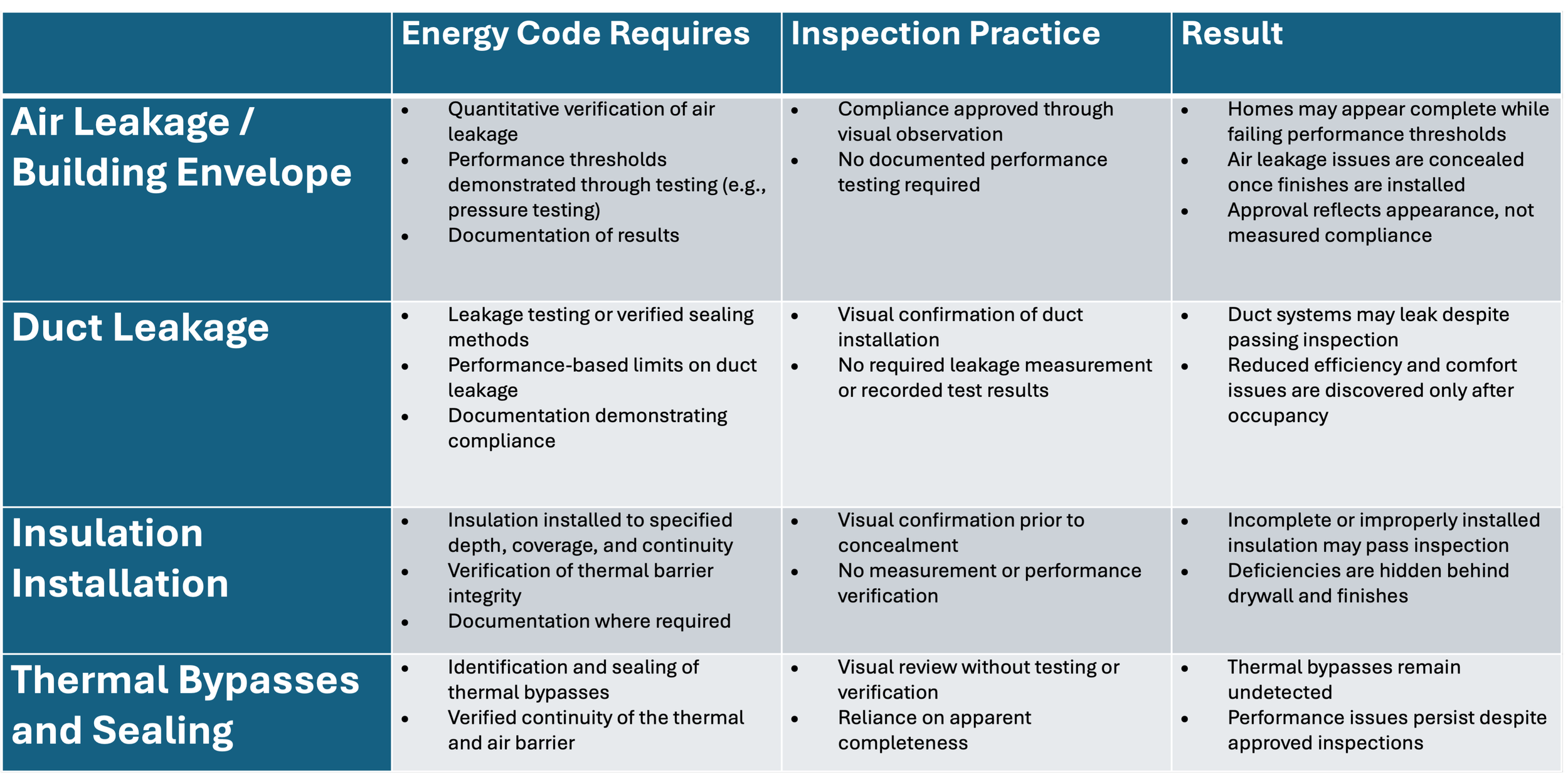
Building codes establish minimum, enforceable standards intended to protect homeowners and the public. Inspections are meant to verify that these standards are met before work is approved and concealed. This page compares what the Energy Code requires with how compliance is determined in practice — and highlights the gap between written standards and real-world enforcement.
-
A passed inspection is commonly interpreted as confirmation that Energy Code requirements were met.
In practice, approval may only indicate that no visible deficiencies were observed — not that required testing or verification occurred.
-
Description text goes hereWhen enforcement policies allow Energy Code compliance to be determined through visual inspection alone, objective verification is replaced by subjective observation.
This reduces construction friction and inspection time, but it also removes the independent verification intended to protect homeowners and ensure long-term performance.
-
Homeowners rely on inspection approvals when purchasing new construction.
When measurable standards are approved without verification:
Deficiencies become permanent once concealed
Corrective options are limited or unavailable
Responsibility becomes fragmented between builders, inspectors, and agencies
-
The gap between code requirements and inspection practices raises broader concerns about whether adopted standards are functioning as enforceable protections or symbolic benchmarks.
Behind the Drywall examines this gap to understand how often approval replaces verification — and what that means for public trust, building performance, and accountability.